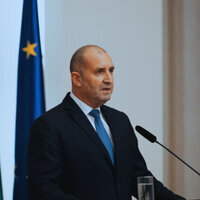


A week ago, Hungary's Viktor Orban lost his 16-year hold on power to Pter Magyar, a former insider who campaigned on cleaning up the system he once served. On April 19, Bulgaria holds its eighth parliamentary election in five years, and former president Rumen Radev's newly formed Progressive Bulgaria party enters the race with a commanding lead: somewhere around 31?34% of the vote in aggregated polling.
For Western observers, the shorthand writes itself: "Radev is the next Orban." The former NATO pilot has clashed with Brussels, questioned military aid to Ukraine, and denounced the security agreement that Bulgaria's caretaker government signed with Kyiv.Politicoplaced him on a shortlist of potential successors to Orban's role as the EU's "chief disruptor," noting that Brussels is already ""
But the analogy misunderstands the Bulgarian landscape. Bulgaria already has its own Orban, and his name is Boyko Borissov. The more interesting question is whether Radev is the Bulgarian Pter Magyar - the man who could finally break the system Borissov built.
Whois Rumen Radev
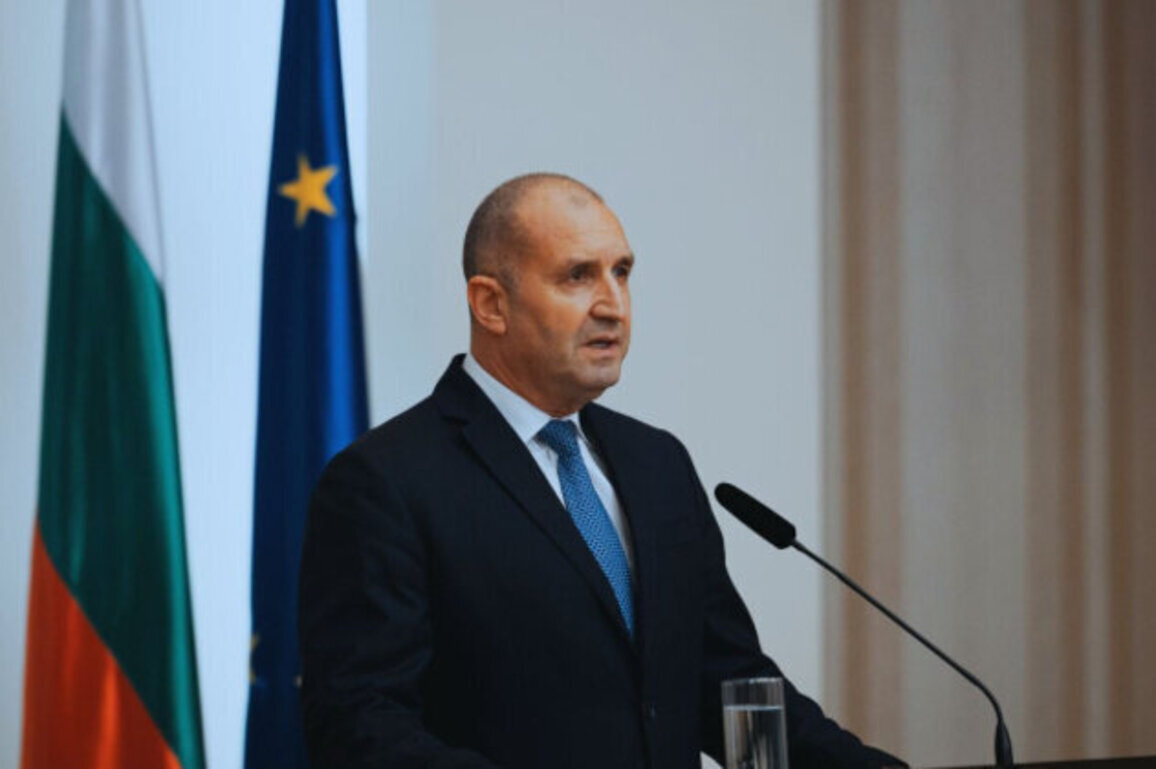
Radev's biography resists easy categorization. Born in Dimitrovgrad in 1963, he spent his early career not in party backrooms but in the cockpit of a MiG-29. He logged over 1,400 flight hours, performed aerobatic stunts like the "Cobra" and "Bell" at air shows, and rose to the rank of Major General and Commander of the Air Force. He trained at Maxwell Air Force Base in Alabama, graduated top of his class from multiple military academies, and earned a doctorate in military sciences.
When the Bulgarian Socialist Party (BSP) sought a presidential candidate in 2016, Radev was an attractive figure: a popular independent with a worldview compatible with the socialists, but untainted by the party's communist-era baggage. He ran nominally as an independent, won convincingly with 58% in the second round, and was reelected in 2021.
The alliance with the BSP soured quickly. Radev demanded what he called "emancipation" from the party, insisting on complete independence. His resignation from the presidency in January 2026 was an unprecedented move by a sitting Bulgarian head of state and was framed as a direct challenge to the "political class" that had "betrayed the hopes of the Bulgarians in compromises with the oligarchy."
Further reading:
Bulgaria's Actual Orban: The Borissov System
Boyko Borissov has been the dominant figure in Bulgarian politics since 2009. A former bodyguard and firefighter who rose through the ranks of the Interior Ministry, he came to power promising to fight corruption and restore order. His GERB party has won every parliamentary election since 2009, with only brief interruptions when the Petkov cabinet ruled for 6 months (December 2021) and when caretaker governments took over.
But his tenure produced what critics describe as systematic state capture. "The Prosecutor's Office, the Supreme Judicial Council, the anti-corruption committee - all captured by GERB and Borissov's henchmen," as one . Multiple wiretap scandals, leaked photographs of cash and gold bars allegedly found in his residence, and a 2020 protest movement that brought tens of thousands to the streets have all failed to dislodge him.
Borissov's survival has depended on a symbiotic relationship with Delyan Peevski, for having "regularly engaged in corruption, using influence peddling and bribes to protect himself from public scrutiny and exert control over key institutions." Peevski, a former media mogul and MP from the Movement for Rights and Freedoms (DPS), was also sanctioned by the UK for "misappropriating state funds" and "exerting control over key institutions and sectors in Bulgarian society."
As opposition figure Ivaylo Mirchev put it: "Peevski protects Borissov from prosecution and investigations, while Borissov provides Peevski with political legitimacy". Freedom House ranks Bulgaria as the EU's second-least free country after Hungary, largely due to the entrenchment of this system.
The Radev-Orban Comparison: Not Entirely Wrong
The concerns in Brussels and Kyiv about Radev himself are not baseless. As president, he repeatedly diverged from Sofia's pro-Ukraine line. He condemned EU sanctions against Russia, argued that military aid to Kyiv prolongs the conflict, and engaged in a tense 2023 confrontation with Volodymyr Zelensky in Sofia. More recently, he denounced Bulgaria's 10-year security deal with Ukraine:
In front of the Kyiv Independent, Ruslan Stefanov, an analyst at the Center for the Study of Diplomacy, who has "tried to cater to extreme Euroskeptic, and typically also pro-Russian, voter groups." Emilia Zankina of Temple University Rome puts it more bluntly: "There is a great concern that he may try to steer the country away from its pro-European line."
" though it adds the important caveat that Radev's influence would be "nowhere near that of Viktor Orban, at least initially."Politicoexplicitly included Radev among the "possible successors to Orban as a key destabilizer in the EU," alongside Slovakia's Robert Fico and Czechia's Andrej Babi?.
Yet the Orban parallel also has obvious limits. Orban spent years building a self-described "illiberal state" with a supermajority in parliament, a captured judiciary, and a media ecosystem loyal to Fidesz. Radev, by contrast, leads a coalition that will need partners to govern. His platform contains deliberate ambiguity about the EU and NATO, and at his program launch he reportedly offered no direct criticism of either institution. Bulgarian political expert Dimitar Bechev toldPoliticothat the biggest question is "what a future coalition will look like" and that Radev could pivot toward reformist or center-right partners rather than the far right.
The Magyar Mirror: An Insider Who Cleans House
This is where the Hungarian parallel becomes more useful and where Radev's own rhetoric aligns more closely with Pter Magyar than with Viktor Orban.
Pter Magyar did not defeat Orban by running to the left or by embracing Brussels orthodoxy. He was a conservative, a former insider, and a man who spent two years crisscrossing Hungary, shaking hands and listening. He promised to clean house, not to overturn the national-conservative worldview. He was, in effect, the system's own creation turning against it.
Radev has placed anti-corruption rhetoric at the center of his campaign, vowing to break the "mafia state" that he says undermines Bulgaria's institutions. His resignation from the presidency was a calculated gamble to enter the parliamentary arena directly, a move that allowed him to position himself as an outsider despite nearly a decade in the presidential palace.
. His coalition has pledged to dismantle "what he called an oligarchic governance model, cutting financial flows linked to it." He has ruled out any coalition with Borissov or Peevski, describing cooperation with them as "completely out of the question."
The Magyar parallel hinges on turnout. In Hungary, record-high participation delivered the upset. In Bulgaria, turnout has been in freefall, dipping below 40% - the lowest in the EU. But Radev's candidacy has generated projections of a surge to 60%, a level not seen since 2009. If that materializes, some analysts believe Radev could win a mandate large enough to sweep out the entrenched power structures that Borissov and Peevski have built over the past 16 years.
The difference, of course, is that Magyar was an actual insider in Orban's system, a former Fidesz member and diplomat who knew where the bodies were buried. Radev, by contrast, has always positioned himself against the Borissov-Peevski axis, even as president. His anti-system credentials are more established, but his institutional knowledge of how to dismantle the system from within may be shallower.
The Bulgarian Reality: Coalition Math
Here is where the Magyar analogy runs into Bulgarian arithmetic. Even with a projected 31?34% of the vote, Radev will fall well short of a parliamentary majority. He will need coalition partners to rule. The next two parties after Progressive Bulgaria are expected to be GERB (Borissov's party) and PP-DB (the pro-European reformist bloc), which have both, during the campaign, effectively ruled out governing with him.
The rhetoric has hardened in the last few weeks. PP-DB leader Asen Vassilev has explicitly framed Radev's project as "the alternative that Orban proposed in Hungary", a model he says does not work. Radev has returned fire, accusing his opponents of hypocrisy and pointing to the "assembly" coalition that briefly united GERB and PP-DB in 2023, which was a coalition that many voters saw as a betrayal of the anti-corruption mandate that PP-DB had campaigned on.
If no coalition forms, Bulgaria could face a ninth election later in 2026. Radev, in this scenario, becomes not a strongman prime minister but another victim of the very political deadlock he promised to break.
There are also questions about what Radev would actually do in office. Germany'sFrankfurter Allgemeine Zeitungnoted that "almost nothing is known about his intentions, especially in the area of financial and fiscal policy." has flagged the same opacity. The previous government collapsed over the 2026 budget. If Radev cannot articulate and implement a coherent economic plan, any government he leads could be short-lived.
Further reading:
Radev's "strategic ambivalence" toward Russia is also a double-edged sword. It wins him votes among the roughly half of Bulgarians who lean pro-Russian. But it makes him toxic to the pro-European parties whose votes he would need to govern. The contradiction may prove impossible to manage.
Three Possible Futures
As Bulgarians head to the polls on April 19, Rumen Radev's trajectory remains genuinely uncertain. Three scenarios seem plausible.
The Orban-Lite Path.Radev forms a government with smaller pro-Russian and nationalist parties, halts military aid to Ukraine, reopens the door to Russian energy, and becomes Brussels' newest headache: basically a junior-league Orban with less institutional power but the same obstructionist instincts. In this scenario, the Borissov-Peevski axis survives in opposition, weakened but not dismantled. Bulgaria drifts toward the illiberal camp within the EU, though without the full state capture that Orban achieved in Hungary.
The Magyar-Like Path.Radev rides a wave of high turnout to a decisive victory. He marginalizes the Borissov-Peevski axis, either through electoral defeat or by peeling away enough GERB voters to collapse the party's base. He pursues genuine judicial and anti-corruption reforms, perhaps with support from reformist elements in PP-DB who are willing to overlook his foreign policy positions in exchange for domestic reform. In this scenario, Radev proves that "Bulgaria first" does not mean "Brussels last" and that a conservative reformer can break the oligarchic system without embracing full-blown illiberalism.
The Path of Disappointment.He wins the election but fails to form a government. Bulgaria stumbles toward its ninth election since 2021. Radev becomes a historical footnote: a former president who gambled on breaking the system and was instead broken by it. Borissov and Peevski survive, perhaps even strengthen, as the public grows more cynical and turnout collapses further.
The Western media's binary of "NATO pilot or Putin sympathizer" has always been too simple. Radev, like Bulgaria itself, exists in the gray zone between East and West, reform and retrenchment, promise and peril.
But the more useful question is not whether Radev is Orban. Bulgaria already has its Orban, a man who has dominated the country's politics for 16 years through a combination of populist appeal, institutional capture, and strategic alliances with sanctioned oligarchs. That man is Boyko Borissov, and his partner in the system is Delyan Peevski.
The real question is whether Radev is the Bulgarian Pter Magyar - the figure who can finally break that system from within, or at least from the position of a popular outsider with a mandate for change. Sunday's vote will not provide a definitive answer, but it will begin to clarify which path Bulgaria is walking. Whether Radev becomes a disruptor, a reformer, or just another footnote will depend not only on how many votes he wins, but on whether he can translate that support into a functioning government and whether Bulgaria's entrenched interests finally meet a challenger they cannot outlast.
This text is published as an opinion piece; the title has been added by our editorial team; the article does not necessarily reflect the views ofNovinite.com